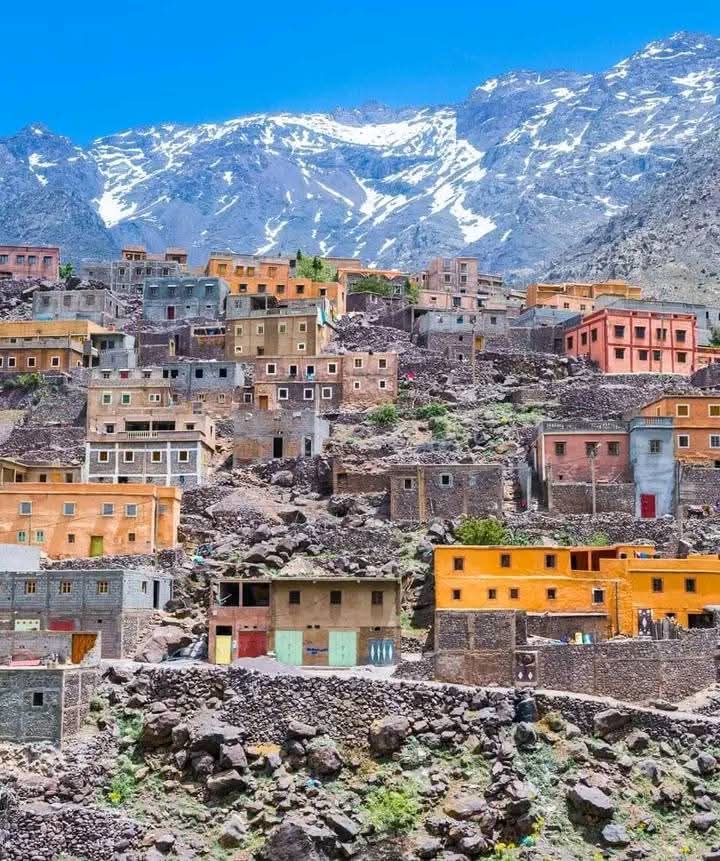
The Amazigh (Berber) are the indigenous people of North Africa, with roots stretching back thousands of years—long before Arab dynasties or Islam reached these mountains. In the High Atlas, Amazigh families carved out life in a harsh environment, building stone-and-clay houses, terracing fields, and relying on communal work to farm, herd, and trade across valleys and passes.
Seasonal transhumance—moving flocks between summer high pastures and winter villages—shaped settlement patterns and identity. Fortified agadir (collective granaries), clan-based cooperation, and the Tamazight language anchored social life.
Today, that heritage remains visible in Imlil’s architecture, dress, music, and hospitality. Customs, festivals, and oral traditions continue to guide daily life, keeping Amazigh culture vibrant in the High Atlas Mountains.