Discover Imlil Morocco

Imlil Morocco – High Atlas Mountains & Amazigh Culture

Imlil Morocco sits at the heart of the High Atlas, where terraced villages, walnut groves and red-earth kasbahs meet the peaks. This is living Amazigh (Berber) culture: seasonal farming, mountain markets, tea hospitality and craft traditions passed down for generations. From Imlil’s valley paths to Toubkal’s ridgelines, hikers discover both spectacular scenery and authentic High Atlas culture. Use Imlil as your gateway to Toubkal for day hikes, village stays and responsible encounters with local life.

Geography & Nature of the High Atlas

The High Atlas is North Africa’s highest mountain range, crowned by Mount Toubkal (4,167 m) above Imlil. Its landscape mixes rugged ridgelines, deep valleys, juniper and walnut groves, and snow-capped peaks in winter. Biodiversity thrives here: walnut trees, cherry orchards, wild herbs, and alpine plants line the valleys. In spring, trails burst with wildflowers; in summer, crisp mountain air keeps hiking pleasant; autumn brings clear views and harvest colors; and in winter the High Atlas turns into a magical alpine world with snowy summits. For hikers based in Imlil, this geography means year-round options—from gentle valley walks to Toubkal summit routes—each season offering a different face of the mountains.

Imlil — Gateway to Mount Toubkal

Sitting at 1,740 m in the central High Atlas, Imlil is a peaceful Amazigh (Berber) village wrapped in green valleys and stone houses. It’s the main trailhead for treks to Mount Toubkal (4,167 m) and many other High Atlas peaks—perfect for day hikes and multi-day routes. Beyond being a staging point, Imlil is a living mountain village: warm Amazigh hospitality, mint tea and traditional cuisine, and a rhythm of life shaped by orchards, terraces, and weekly souks. Simple and welcoming, it’s a place where every path tells a story—and every doorway greets you with a smile.

History and Origins

The Amazigh (Berber) are the indigenous people of North Africa, with roots stretching back thousands of years—long before Arab dynasties or Islam reached these mountains. In the High Atlas, Amazigh families carved out life in a harsh environment, building stone-and-clay houses, terracing fields, and relying on communal work to farm, herd, and trade across valleys and passes. Seasonal transhumance—moving flocks between summer high pastures and winter villages—shaped settlement patterns and identity. Fortified agadir (collective granaries), clan-based cooperation, and the Tamazight language anchored social life. Today, that heritage remains visible in Imlil’s architecture, dress, music, and hospitality. Customs, festivals, and oral traditions continue to guide daily life, keeping Amazigh culture vibrant in the High Atlas Mountains.

Amazigh Traditions and Way of Life

Amazigh traditions in the High Atlas blend simplicity, spirituality, and a deep respect for nature. Hospitality is sacred—guests are welcomed like family and offered mint tea, a classic sign of friendship. Music and dance animate weddings and village festivals; the drum-driven ahwach circle dance and call-and-response songs celebrate unity and joy. Dress carries meaning: women often wear richly embroidered garments and silver jewelry with protective motifs, while men don woolen djellabas suited to mountain weather. Seasonal festivals follow the agricultural calendar, especially harvest gatherings when communities celebrate with food, music, and dance. The Tamazight (Amazigh) language remains widely spoken in Imlil and the High Atlas, passed down through generations and recognized in Morocco alongside Arabic—keeping Amazigh culture vibrant and alive.

Religious and Social Traditions

Faith and community run deep in the High Atlas. Islam is closely interwoven with Amazigh customs, shaping daily life in Imlil and surrounding valleys. Families emphasize respect for elders, neighbourly cooperation, and strong community solidarity—values that guide village decisions and celebrations. Throughout the year, people gather for Eid al-Fitr and Eid al-Adha, as well as local saint festivals (moussems). These occasions blend prayer, music, and charity, bringing villages together to share meals, support those in need, and keep Amazigh culture alive.

Architecture and Village Life

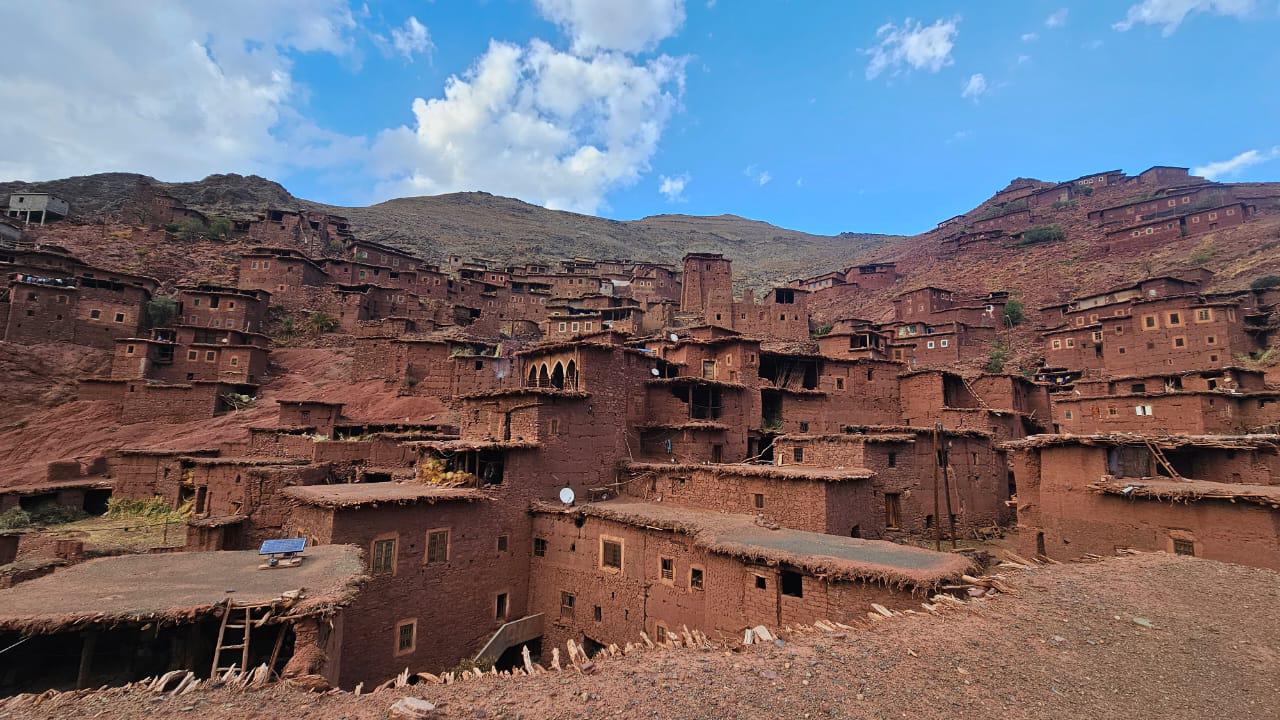
High Atlas villages are built from what the mountains offer—stone and clay—so homes blend naturally into the slopes. Houses are often terraced and clustered, linked by narrow lanes that foster a close-knit community and shared courtyards. Daily life follows the agricultural calendar. Families cultivate barley, corn, and vegetables on terraced fields, tend goats, sheep, and mules, and gather walnuts and herbs in season. Spring and summer bring long days of fieldwork; winter evenings slow to fireside stories, mint tea, and music, keeping traditions alive from one generation to the next.

Arts and Symbols

Amazigh art is full of ancient symbols representing protection, harmony, fertility, and life. You can find these motifs carved into doors, woven into carpets, and crafted into silver jewelry. Each design tells a story, passed down through generations of artisans.
The Amazigh carpet, handwoven by women, is not just decoration — it’s a message of creativity, faith, and identity.

Why Visit the High Atlas

Amazigh (Berber) art is rich in protective symbols and geometric motifs that speak of harmony, fertility, and the cycles of life. You’ll see these signs everywhere—carved into cedar doors, painted on pottery, embroidered into blankets and rugs, engraved on silver jewelry, and even traced in henna and traditional tattoos. Many designs echo Tifinagh letters and ancient patterns such as the diamond/lozenge (fertility and the eye of protection), zigzags (water and life), and crosses (balance and the four directions). The Amazigh carpet—hand-woven by women on home looms—carries more than color and texture; each rug is a coded story of identity, faith, and creativity, passed down from mother to daughter. Worn talismans and ornate silver fibulae (brooches) still used in High Atlas villages are not only beautiful adornments; they are guardians of memory and meaning in everyday life.